
The journal · Entry 18
Punctuation is not a confession
A beloved children's classic just got accused of being AI-generated, based on one em dash in a 1987 printing. The joke worked a little too well, so here is the whole spiral: why punctuation forensics keeps convicting real humans, and the three questions that actually catch bad work.
I told a cringy LinkedIn joke today.
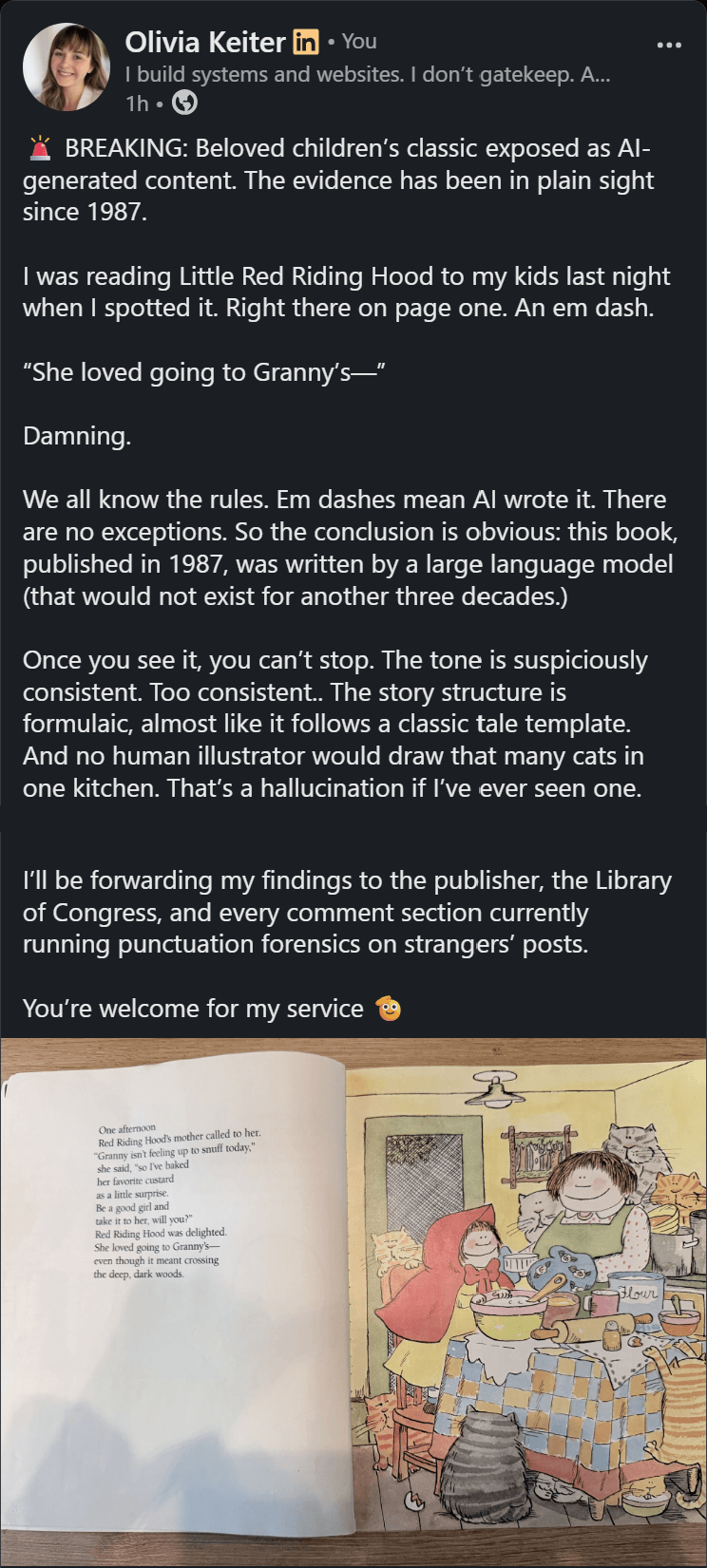
I was making a throwaway joke. But then I spent the next hour spiraling on why the joke works, and now you’re getting a whole episode about it. Welcome to my brain. Congratulations, or maybe condolences. I’m not sure.
As you’ve probably realized, if you post anything with an em dash right now, someone will squint at it. There are entire comment sections dedicated to punctuation forensics. People are scanning strangers’ posts for the mark (—) like it’s a lie detector result, and LinkedIn influencers are including it in every single post about how not to sound like AI. One dash and the verdict is in. A machine wrote this, and you are a fraud.
The more I think about this, the more I think the AI detectors are onto something. Just not exactly what they think they are.
Professional editors love em dashes. Books, journalism, magazine essays, the polished things. Casual human writing barely uses them, and nobody speaks an em dash out loud. You can hear a comma, you can hear a period, but an em dash is a mark you only see, which makes it a written language move. An edited language move. AI models learned to write from mountains of published, professionally edited text, so the em dash came along for the ride, I guess?
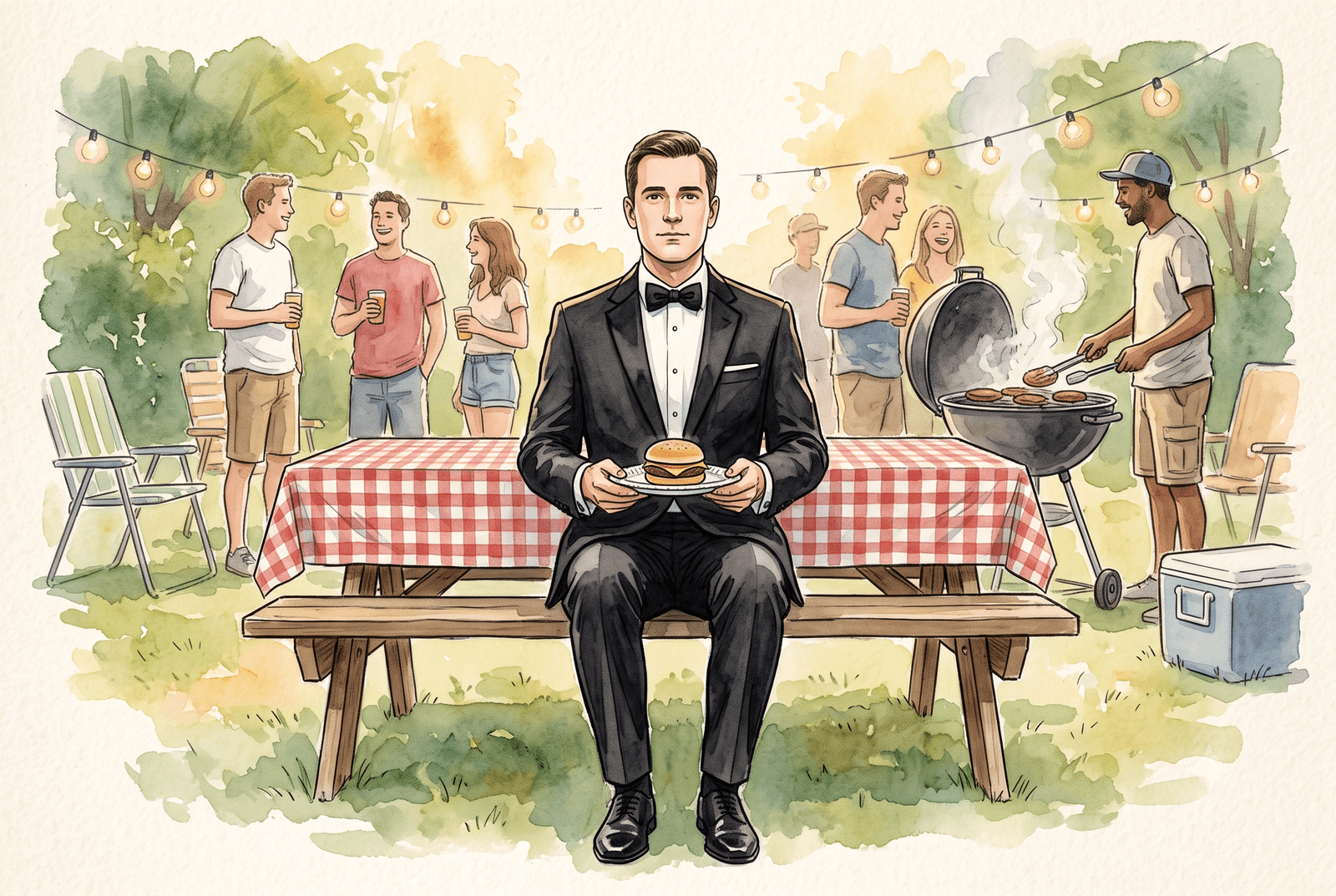
When one shows up in a Facebook post about a kid’s soccer game or the local farmers market, something feels off. The post reads like it went through an editor, and nobody is sending their soccer posts to an editor. People can feel that mismatch, and they reach for the newest explanation available, which is AI. What they caught was an editor’s fingerprint on writing that never had a human editor. These posts are wearing tuxedos to cookouts.
That’s why the detection keeps misfiring on real humans. Anyone who came up through formal writing paths carries that register naturally. Academic writers, lawyers, anyone who spent years writing military reports, and I say that from experience. These people always wrote that way. Now they’re continuing to post like that and getting accused of being robots, because somewhere along the way we decided casual is the only authentic register on the internet and polish = machine.
To be clear about the record, I banned em dashes from my own writing years ago because I don’t like them, long before anyone treated the mark as a lie detector. Partly because they read forensic to me, like a medical report instead of a person talking. The other part is because I am never fully sure I am using them correctly, which may be an admission I’m going to regret posting on the public internet. You can read Episode 13 if you would like the longer version. A personal preference and a proof of humanity can look identical from the outside, and only one of them is mine.
So if the em dash is the wrong test, what’s the right one?
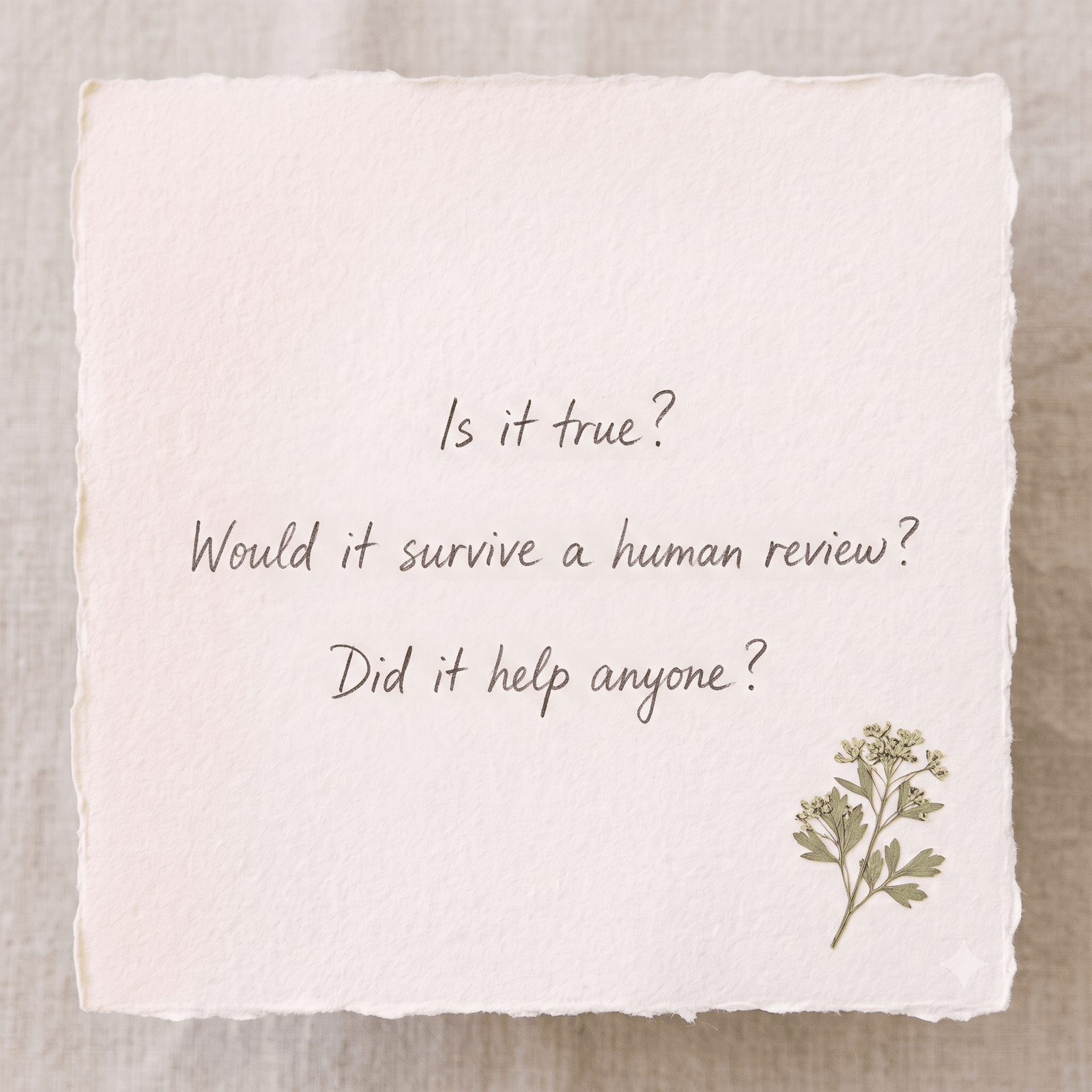
Is it true? Would it survive a human review? Did it help anyone?
Those questions catch everything the punctuation police think they are catching. Forty-five em dashes in five paragraphs plus three statistics that don’t exist anywhere in real life? That fails all of those questions. Not because a machine touched it, but because the work is bad, and it would have been just as bad if a person typed every word. Hallucinated facts and skipped QA are failures of the work. A dash is a dash.
The other accusation stapled to AI use is “lazy.” And sure, some people use AI to be lazy, but people use every tool to be lazy. Some slice of any community will lean on any available system harder than they need to. That is human nature. And honestly, humans being a little lazy and a little selfish is one of the most reliable facts about us.
I can’t code.
I tried to learn years ago. I did not enjoy it. It was genuinely hard for me, and I’m just being honest about that. My mom, on the other hand, speaks five languages. Her brain is built to absorb language. I failed high school Spanish while trying as hard as I could (well, maybe not as hard as I could, but as hard as any teenage girl tries to pass high school Spanish). I can barely spell in my own native language some days, and my thoughts do not come out of my head in order. They come out all at once, sideways, mid sentence, three topics deep. Sorting them into a sequence other people can follow costs me three or four times the effort it seems to cost everyone else. For most of my life, getting my thoughts out in an order other people could follow was the wall. The ideas were always there, waiting on the other side of it.
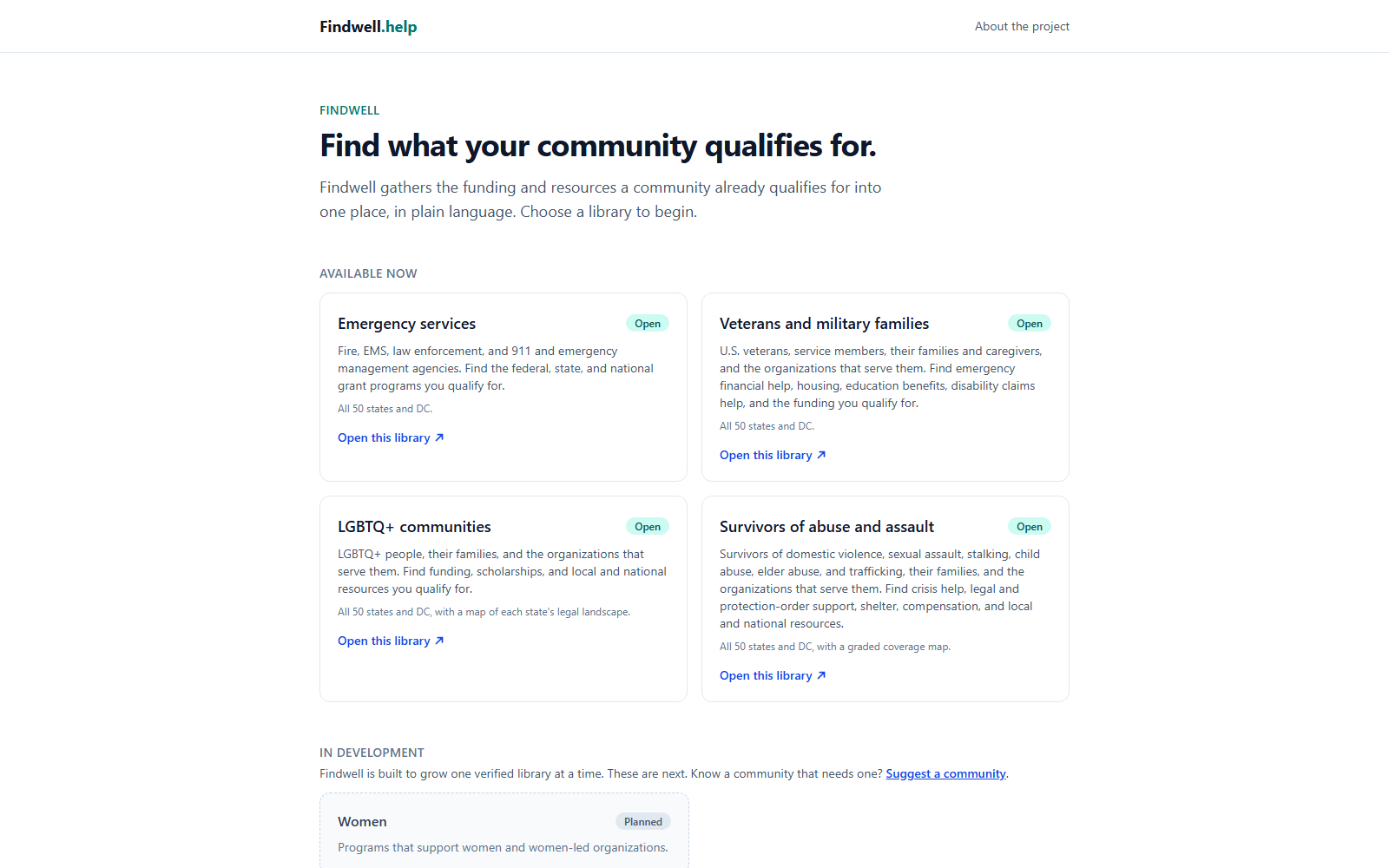
Findwell.help exists because that wall finally came down. Four free resource libraries: for veterans, survivors, the LGBTQ+ community, and emergency service families. No login, no tracking, no ads, no catch. It’s the project I’m most personally proud of, because it exists purely to get resources to people who need them, and it would not exist without AI. I’m not saying that as a humblebrag. No amount of trying on my own was going to rewire how my brain sequences information. Then a tool showed up that could catch my thoughts midair and hand them back to me in an order.
Now think about everyone else. How many other people are sitting there with a head full of ideas and no sorter? How many would be more productive, less stressed, or finally able to ship the idea they actually care about if the bar dropped to where their real skills could clear it? Every “AI is cheating” take quietly assumes we were all standing at the same starting line before. We were not. Humans are different, and that’s a good thing.
And there is a dark side to this that I want to say out loud.
The same lowered bar cuts the other direction. These tools agree with you. Enthusiastically. Consistently. Sometimes when they shouldn’t. Some brains filter that flattery out as noise. Other brains take it as a signal, and for someone who is isolated or spiraling or mentally fragile right now, a tool that cheerfully validates everything is not neutral. It can feed a spiral instead of interrupting one. And of course there are environmental costs, and there are people using it for ugly things, the way people use every powerful tool humans create for ugly things.
This tool will not be right for everyone, and that sentence should be normal to say.
So where did I land after my spiral? I think people should try it (oh really, the AI enabler suggesting people use AI? 🙄😂). In your business, your hobby, your grocery list, wherever the stakes are low for you. And trust your own read. “I tried it and it works for me” is an informed position. “I tried it and it makes me feel a little icky, no thank you” is also an informed position. And you can hold on to that while still believing the tool could be genuinely helpful for someone else. I’m a big believer in pushing back on certainty from people who have never touched the thing they’re certain about.
We are only three or four years into generative AI at any real scale. I know the research technically goes back to the fifties, put down your pitchforks. But the point is, this early on and moving this fast, changing your mind as new information arrives is what functioning, sane humans do.
As for the book, it was obviously written by a person. Probably a person with a good editor, which explains the em dash. The cats were there, but they were also drawn by a person. Case closed.
One more thing, since we started with a punctuation mark and somehow ended up here.
If you’re reading this a little afraid to use AI because of what people might say, or a little afraid to type an em dash because someone might run forensics on you, consider this your permission slip. Write like yourself. Build with whatever helps you build. The people scanning your punctuation for a verdict were never your audience, and the people you’re actually trying to reach only care whether the thing you made is true, holds up, and helps someone.
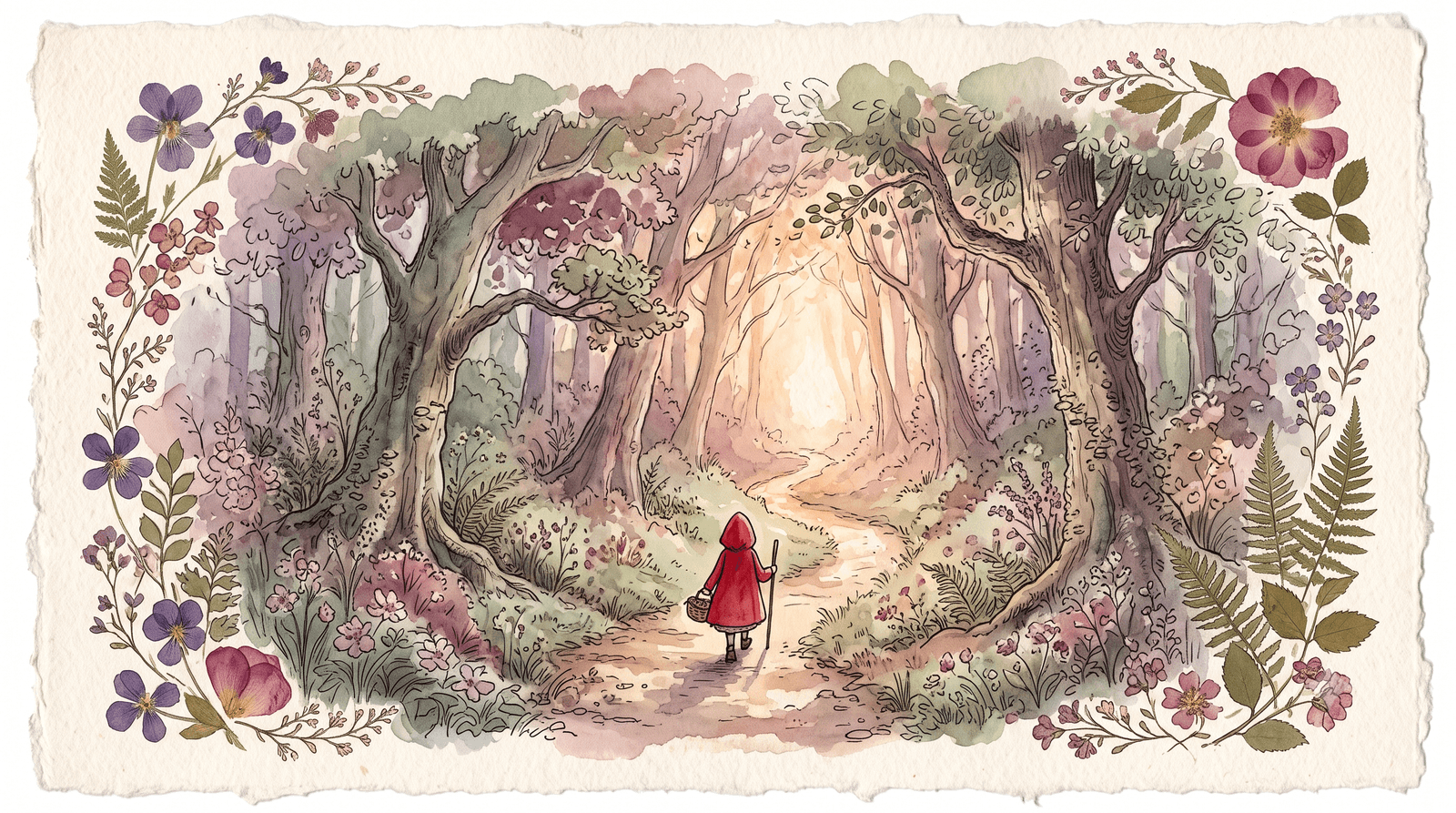
A picture book from 1987 just got accused of being a robot and survived. Little Red made it through the deep, dark woods. You will too.


Stay in the loop
Get the next entry.
New notes land in your inbox when there is something worth reading. No cadence, no filler.
Powered by Buttondown. One click to unsubscribe, always.