
The journal · Entry 25
The wall came down
Building got cheap. Today, on a call where a handful of us shared our current builds and worked on each other's ideas, someone said something that has me feeling different about how we work with AI, and about what people are worth once anyone can build.
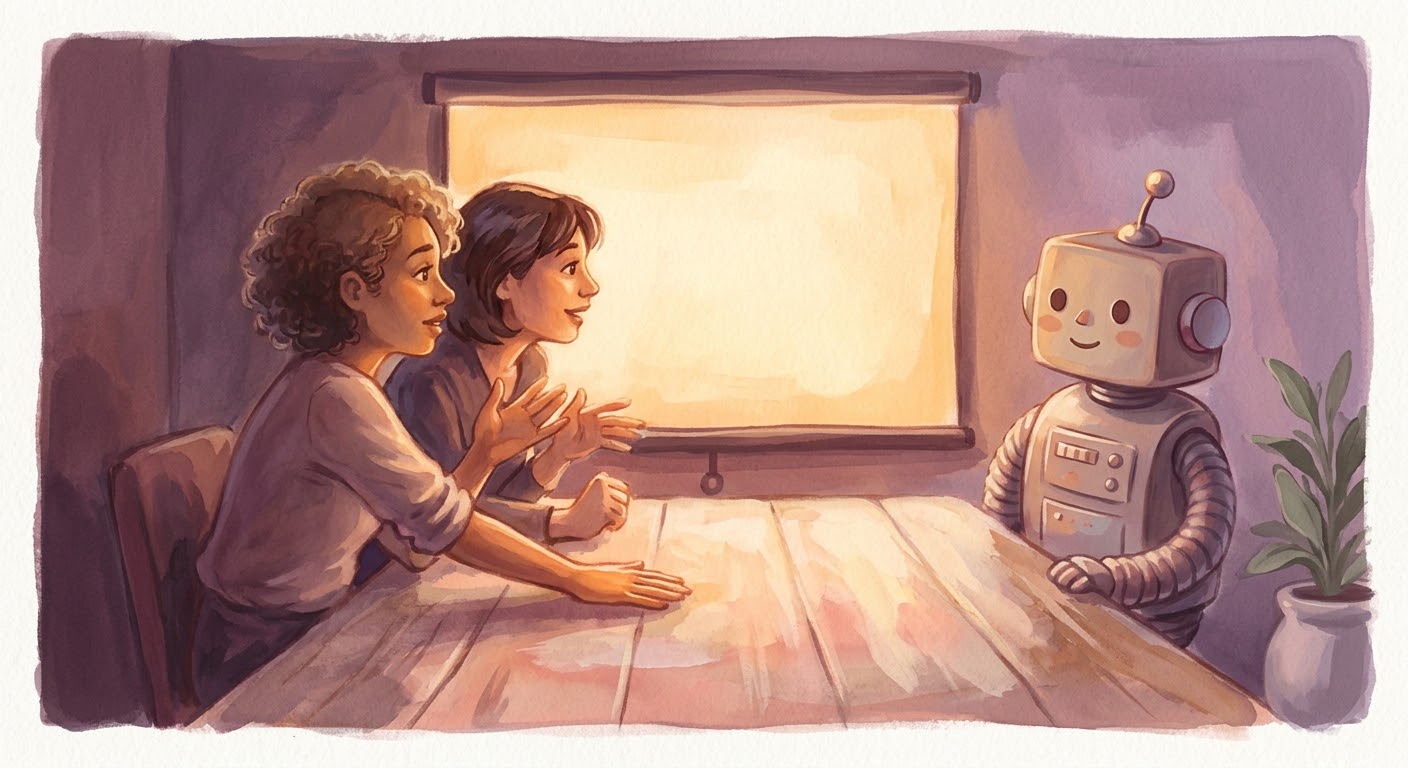
There’s a moment at the end of every delivery when the whole room stops breathing for a second.
You’ve shown the thing. The demo is over, the screen is still up, and nobody has said a word yet. Everyone on the client’s side is staring back at you and you’re wondering: Did I get it? Did I understand what they asked for? Then somebody finally says it out loud. “You have no idea how much time this is going to save my team. Do you understand how long we’ve had this problem?”
I’ve stood in that room more than once, and I’ve been thinking about it all day because of something someone said.
“Our thoughts and our ideas are actually a lot more valuable because we have discernment and judgment and taste as a collective group.”
Pete Sena, Executive Chairman of GPC and founder of Digital Surgeons
I wrote it down immediately.
The wall
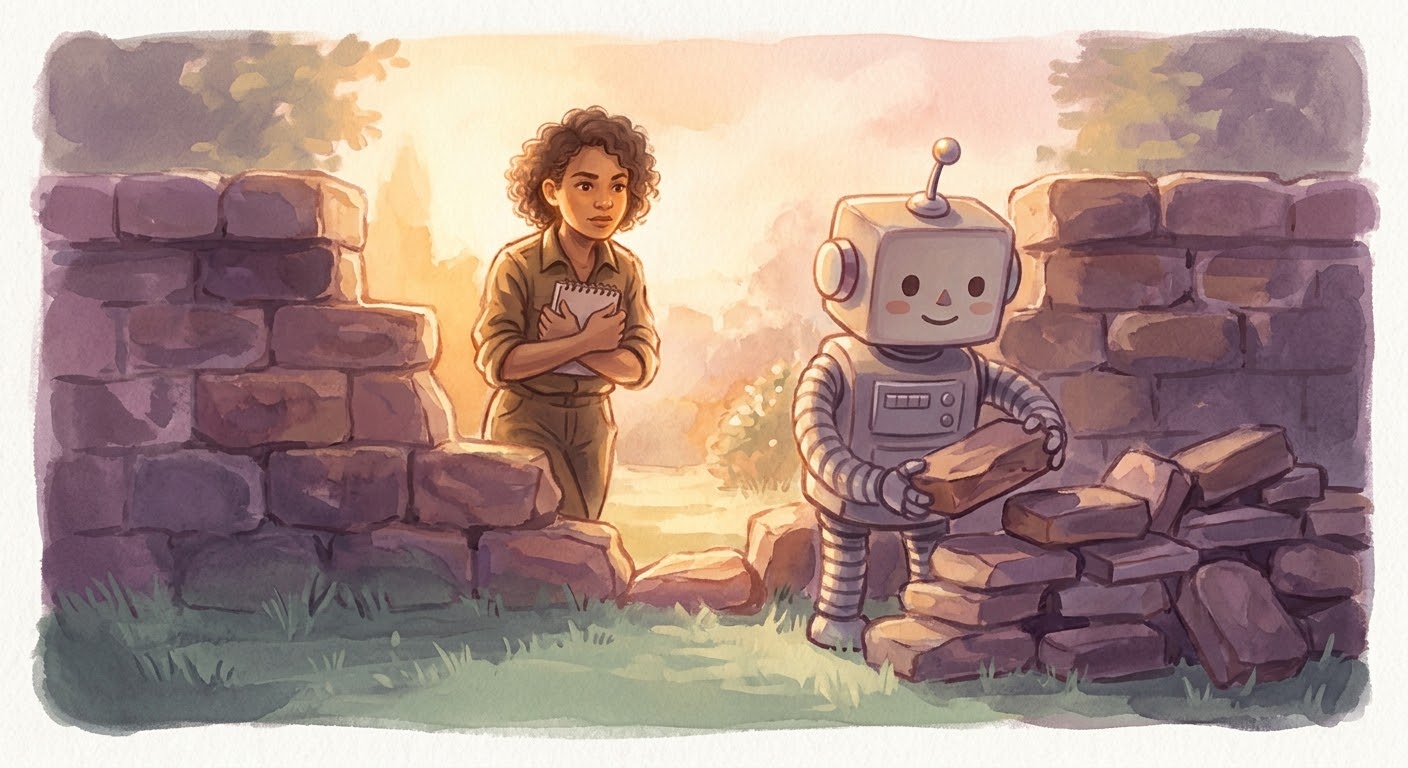
For most of my career, the hard part of building software was building the software. You needed people, you needed months, you needed the funding. That was the wall, and it was high and it kept a lot of good ideas stuck on the wrong side of it.
That wall is coming down. Someone with nearly no technical background can describe what they want and have a semi-working first version in hours. I wrote a whole entry about not needing to know how to code, and I still mean every word.
When anybody can build, a lot more gets built. So the building isn’t scarce anymore. The scarce thing moves to knowing which of those things deserves to exist, whether the one in front of you solves a problem, how it feels to use, and whether the customer on the other end feels understood.
I’m not skipping the hard part
People are afraid of being replaced by AI, and that fear is fair. It’s a fear about a paycheck. Some jobs are going to change for good, and some people will lose work because of it. While I don’t believe in using AI to cut jobs, I’d be lying if I told you nobody will. Every day I ask myself how I’m using AI and how that use could be affecting other people. We should all be aware of that future and preparing for it.
This entry is about the other half of that story though, which is what people are worth once the building is cheap. I think Pete’s got it right. We’re worth more, not less, especially when we work together.
What the model doesn’t carry
Claude can say “I understand your problem.” GPT says “I know what you mean.” AI can lay out the problem and the steps to fix it, and most days it gets them right. In Entry 22 I wrote about who answers for it when it gets them wrong. The thing AI doesn’t have is weight.
Claude has never been responsible for the finances of a company bringing in millions in revenue, paying for hundreds of employees, their livelihood and the food they put on their table. Grok has never made a mistake that meant someone didn’t get paid on time, and then had to look that person in the eye and tell them their paycheck will be late. I spent seven years in Navy IT, where if I didn’t do my job, other people couldn’t do theirs, and their job was to keep other people safe. As a human, you carry those feelings around with you. It changes how carefully you check your work because you’ve seen and felt the weight of it.
And Claude has never stood in the room I started this post with, feeling the air come back into your lungs when the client realizes you understood them. Going to sleep that night knowing someone’s job got less stressful because of you.
Whatever is or isn’t happening inside a model, the weight of a wrong call lands on the people using it. People who have carried that weight develop judgment, because they know what a bad call costs and exactly who pays for it. They’ve been on the other side of someone else making a mistake too.
Look at who is in those examples. The person waiting on a paycheck. The client holding their breath. There is always somebody else in the picture, and that’s the part of Pete’s line I think is extra noteworthy: “as a collective group.” Judgment gets sharper when you answer to other people. Taste gets sharper when other people get to react to your idea before it ships. That team call was a small version of it. A handful of us with mostly-finished ideas, making each other’s ideas better.
The hire you get to make
Okay, that was touchy-feely, but how does it play out? Think about a finance team that processes payments from a business’s clients. Hand them a system they trust, built around their own processes and data. It handles the payments that look like the thousand that came before them. Anything that doesn’t match gets handed to a person on the team.
A human on that team decided what counts as a match in the first place, and another keeps checking that the system is still getting it right. Those are the same people who have always caught the invoice that looks off. Now that’s the part of their day they get back, where it used to be squeezed in around the volume.
Keep thinking it through. That team processes payments twice as fast with the same people, just as accurately as before, maybe better. Nobody loses a job. And the company that was about to hire someone for payment processing, just to keep up with its own growth, gets to make a different hire. Someone who goes and sits at a farmer’s table, or across from an engineering team, and explains why this business is the one to trust with the job. Maybe they have the opportunity to expand in a city the company could never reach before.
That conversation runs on talking to the person in front of you and earning their trust. No system is going to be able to do that for you.
It’s one wall in two places. It came down for the person building the product and it came down for the back office. On the far side of both, there’s a human sitting across from another human. (are you picking up what I’m putting down yet?)

What I’d tell you
If you run a company, watch what happens when the volume work gets lighter. Your team just got time back, and what happens with that time is your call. I’d keep every person you have and let them spend it on the part of the job that has always needed them. Then, when you grow, your next hires can go wherever a person across the table makes the biggest difference. While you’re at it, look at the judgment already sitting in roles that never got credit for it, like your admins and your payment processors. It has been there the whole time.
If you’re worried about your own job being replaced by AI, find the part of your work that needed you. The catch nobody else would have made. The customer who stayed because of how you handled the call. Do more of that, and make sure the people around you can see it.
There’s a harder question sitting behind this one. If the system handles the routine work, where does someone new learn the routine work and how to spot the payment that doesn’t belong? I don’t have that answer yet. I think it needs its own entry.


Stay in the loop
Get the next entry.
New notes land in your inbox when there is something worth reading. No cadence, no filler.
Powered by Buttondown. One click to unsubscribe, always.